Delta Airlines + Porsche 356
From Warbird to Workhorse: How the Curtiss C-46 Commando Carried Early Sports Cars Like the Porsche 356
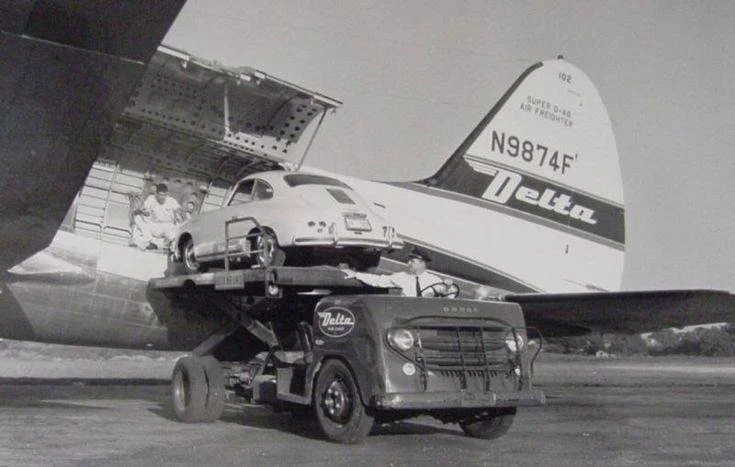
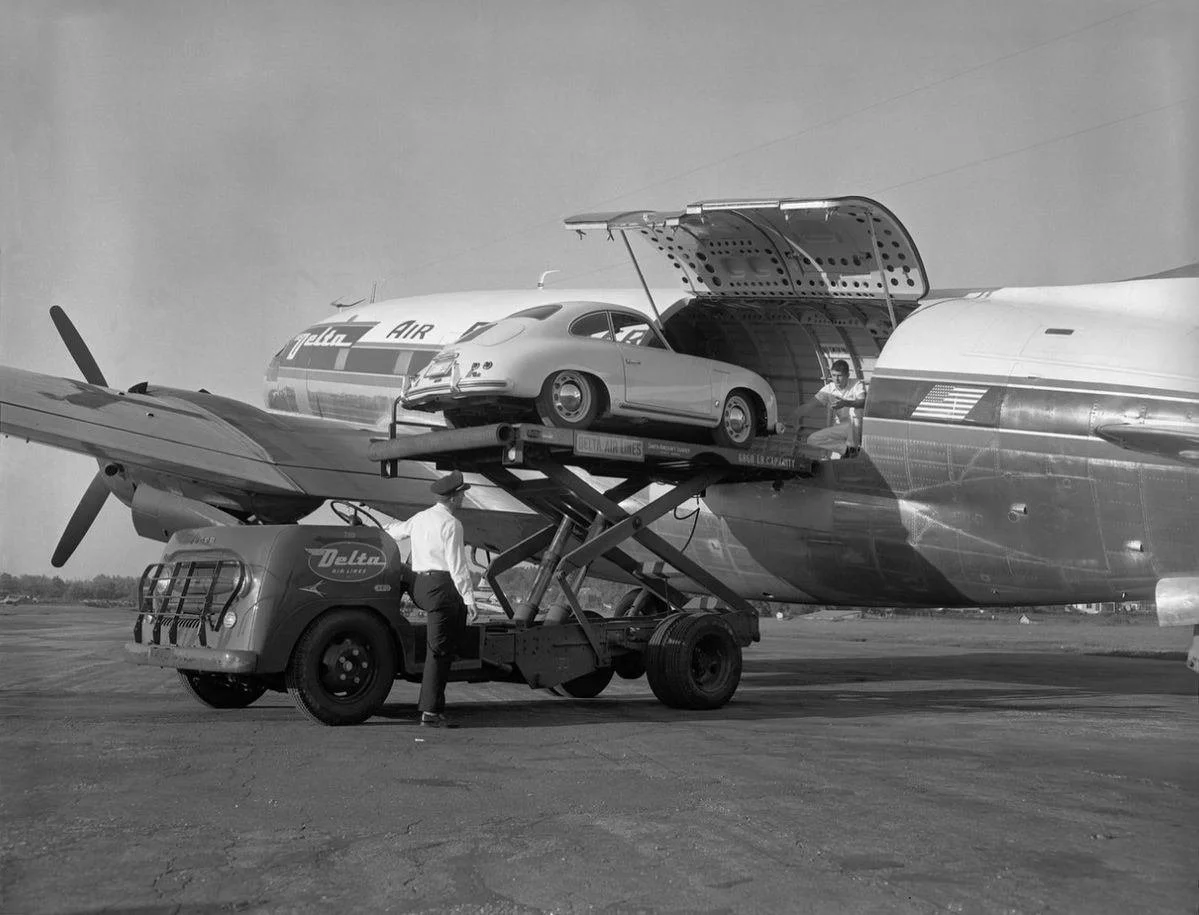
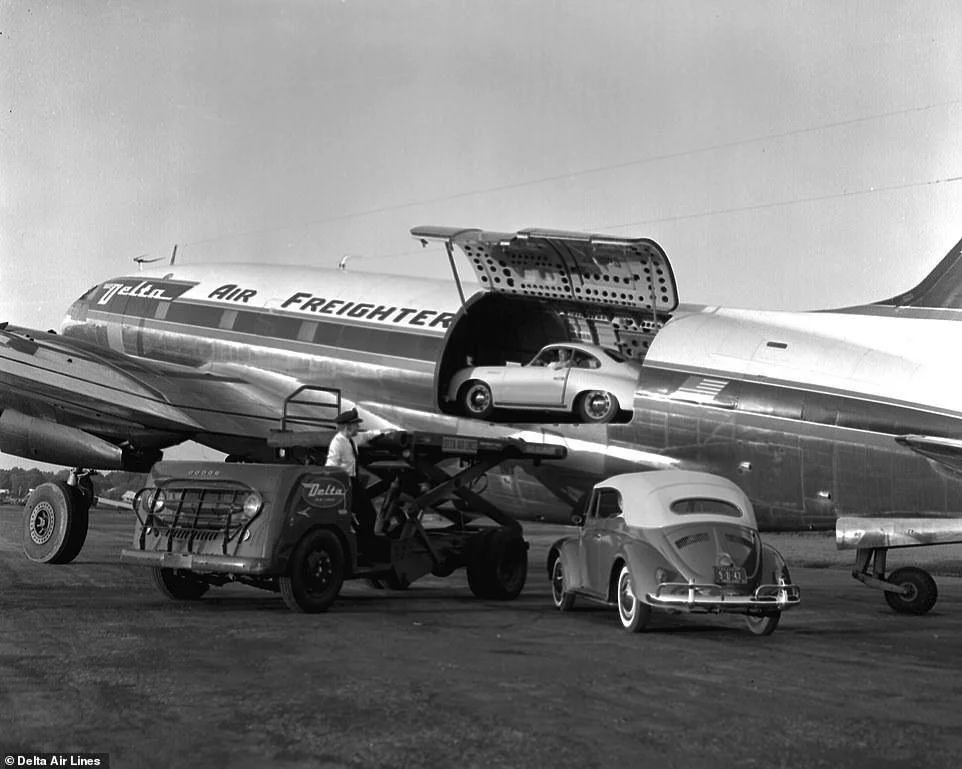
In the years immediately following World War II, the global transportation network was being rebuilt from the ground up. Airfields that once launched bombers were suddenly moving freight, and surplus military aircraft found new life in civilian hands. Among them was the rugged Curtiss C-46 Commando—an aircraft that, for a brief moment in history, helped move some of the world’s earliest sports cars across continents.
While better known for hauling troops and supplies over “The Hump” in the China-Burma-India theater, the C-46’s second act was just as fascinating: it became an airborne bridge between Europe’s emerging automotive scene and the American market.
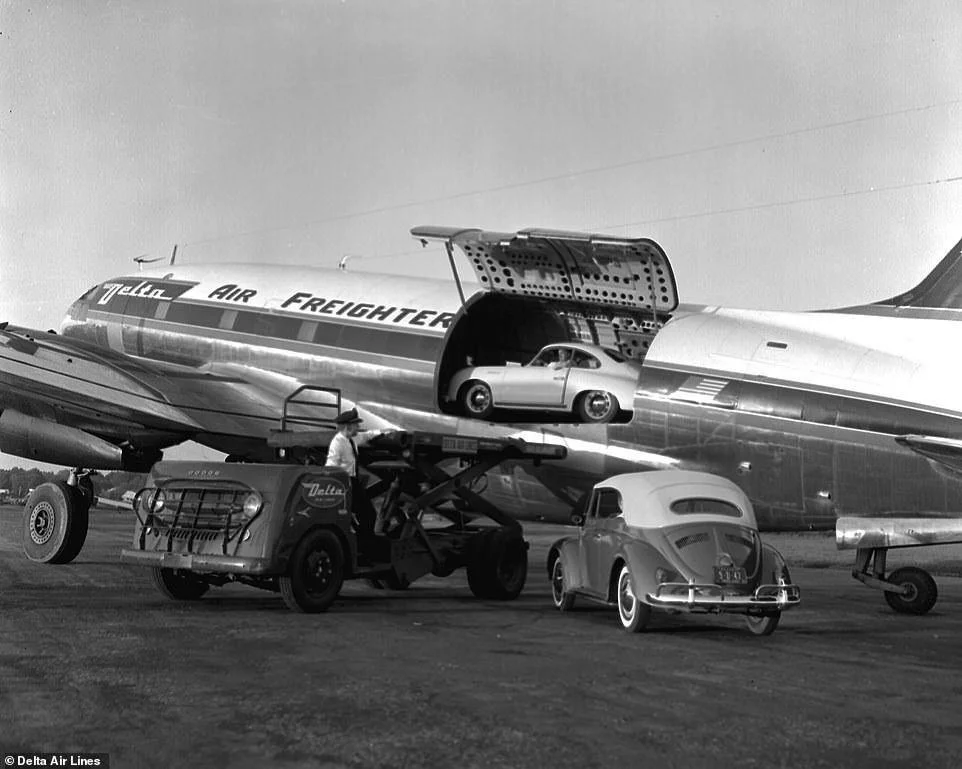
The Curtiss C-46 wasn’t subtle. It was large, powerful, and designed to carry heavy loads in tough conditions. That made it uniquely suited for postwar logistics:
Wide fuselage and large cargo doors made loading bulky items—like cars—possible
High payload capacity (up to ~15,000 lbs) allowed multiple vehicles per flight
Long range enabled intercontinental transport with fewer stops
For airlines like Delta Air Lines and independent cargo operators, these aircraft were inexpensive and immediately available. For automakers trying to break into new markets, they were a lifeline.
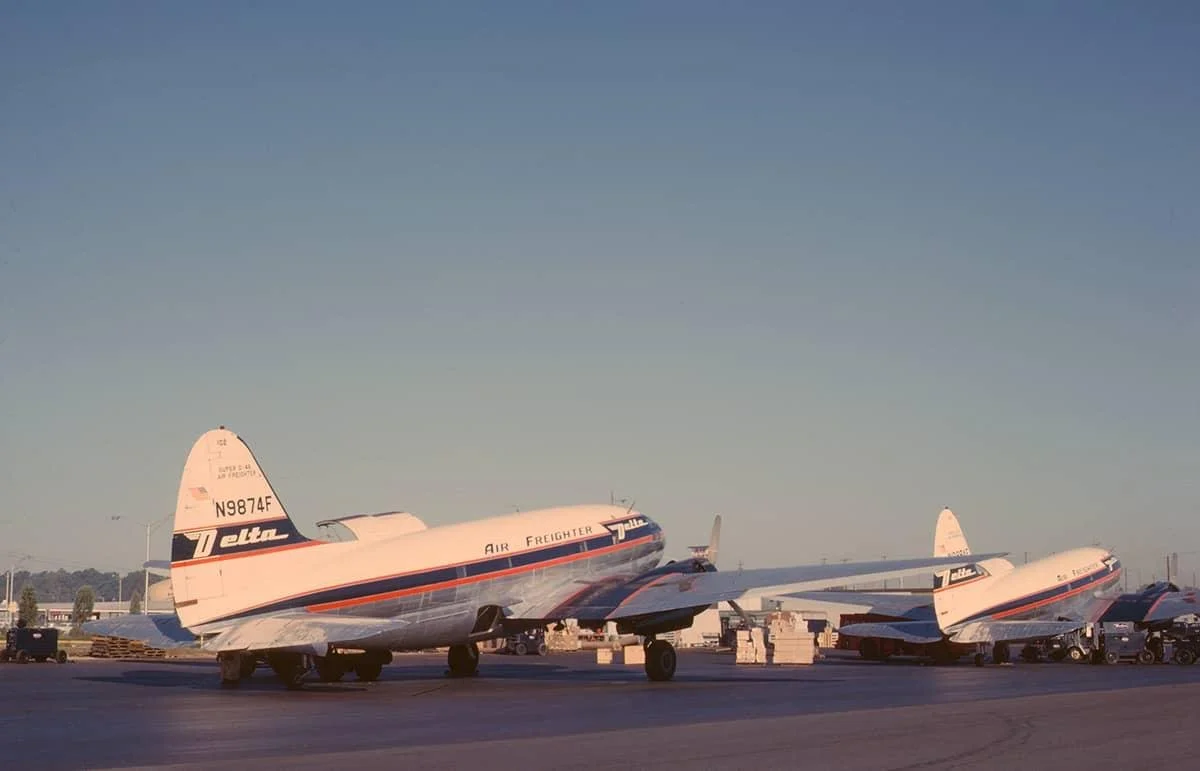
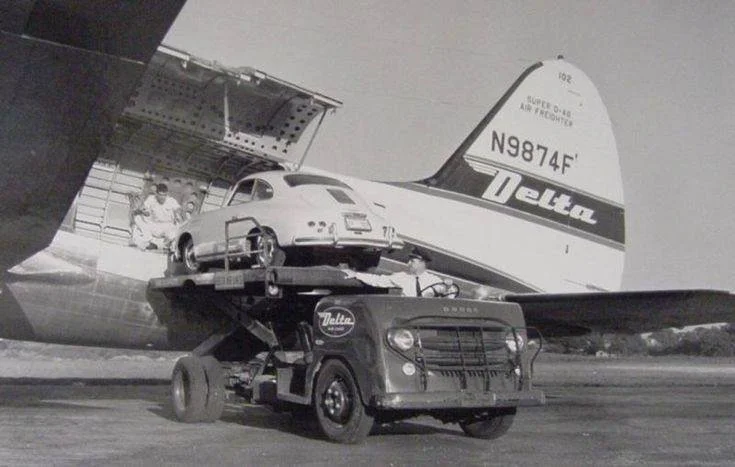
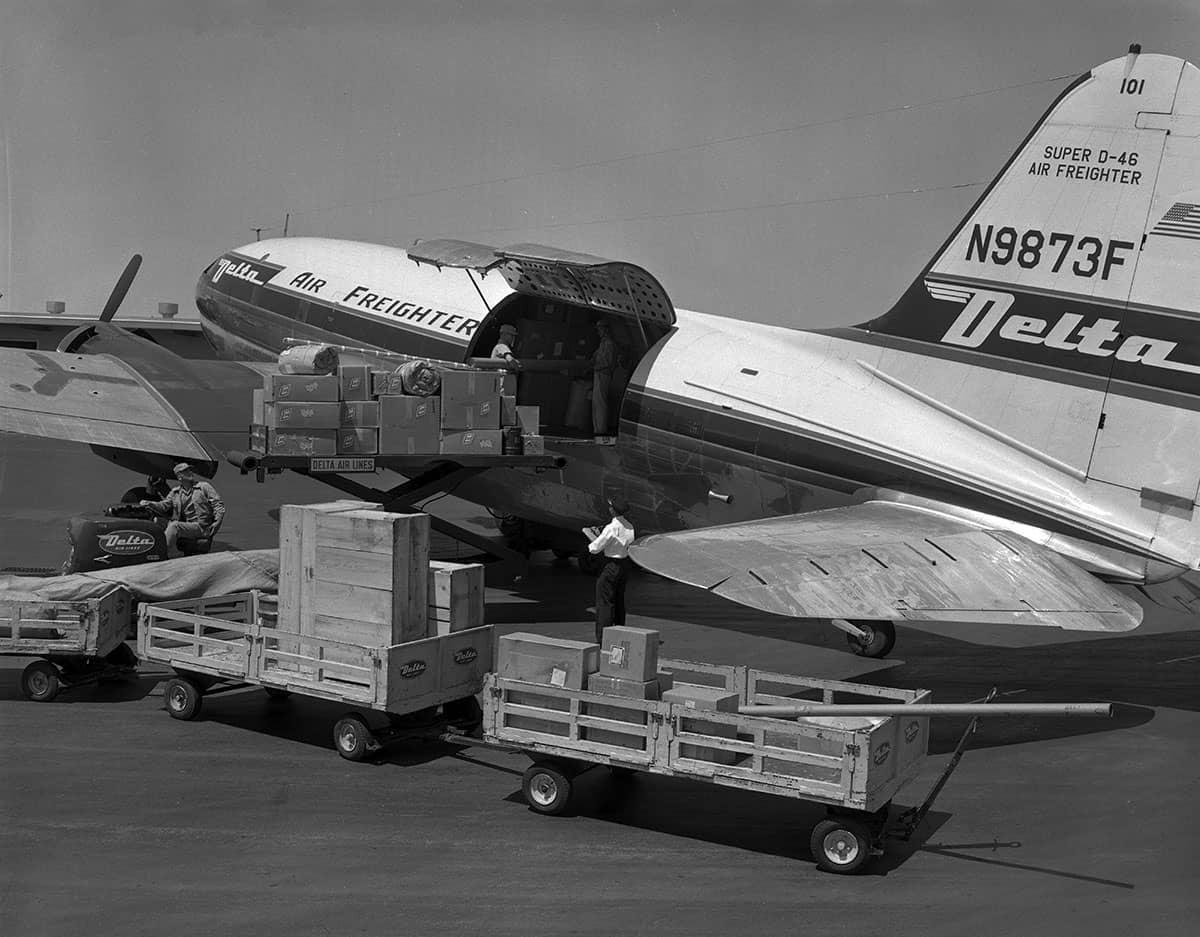
Loading a Porsche 356 into a Curtiss C-46 wasn’t exactly plug-and-play—but it worked.
Given the 356’s compact size and light weight (~1,300–1,700 lbs depending on model), multiple cars could fit in a single aircraft, depending on configuration.
The use of aircraft like the Curtiss C-46 for transporting cars didn’t last long—but it didn’t need to.
By the early 1950s ocean freight became more reliable and cost-effective and as we know, the US Navy now made it safe for the world to ship via the ocean, purpose-built cargo aircraft improved logistics efficiency and automotive distribution networks matured as a result.
Even Delta Air Lines moved on quickly from the C-46, transitioning to more modern fleets.
This brief chapter sits at the intersection of aviation history and automotive culture. It highlights how wartime technology accelerated peacetime innovation, It shows how scrappy logistics helped launch iconic brands globally and it captures a moment when getting a car wasn’t just a purchase—it was an adventure. We love that!
For enthusiasts today, the idea of a Porsche 356 being flown across the Atlantic in a former military transport feels almost mythical. But it reflects a very real truth. The early days of performance cars weren’t just about engineering—they were about how far you were willing to go to get one.