Lancia Stratos Zero — The Car That Flattened the Future
The Lancia Stratos Zero, designed by Marcello Gandini for Bertone and unveiled in 1970, is less a car and more a manifesto on wheels. Developed in Turin during one of the most experimental eras of automotive design, the project pushes beyond styling into a radical exploration of geometry, proportion, and the very definition of what a car could be.
A Study in Pure Geometry
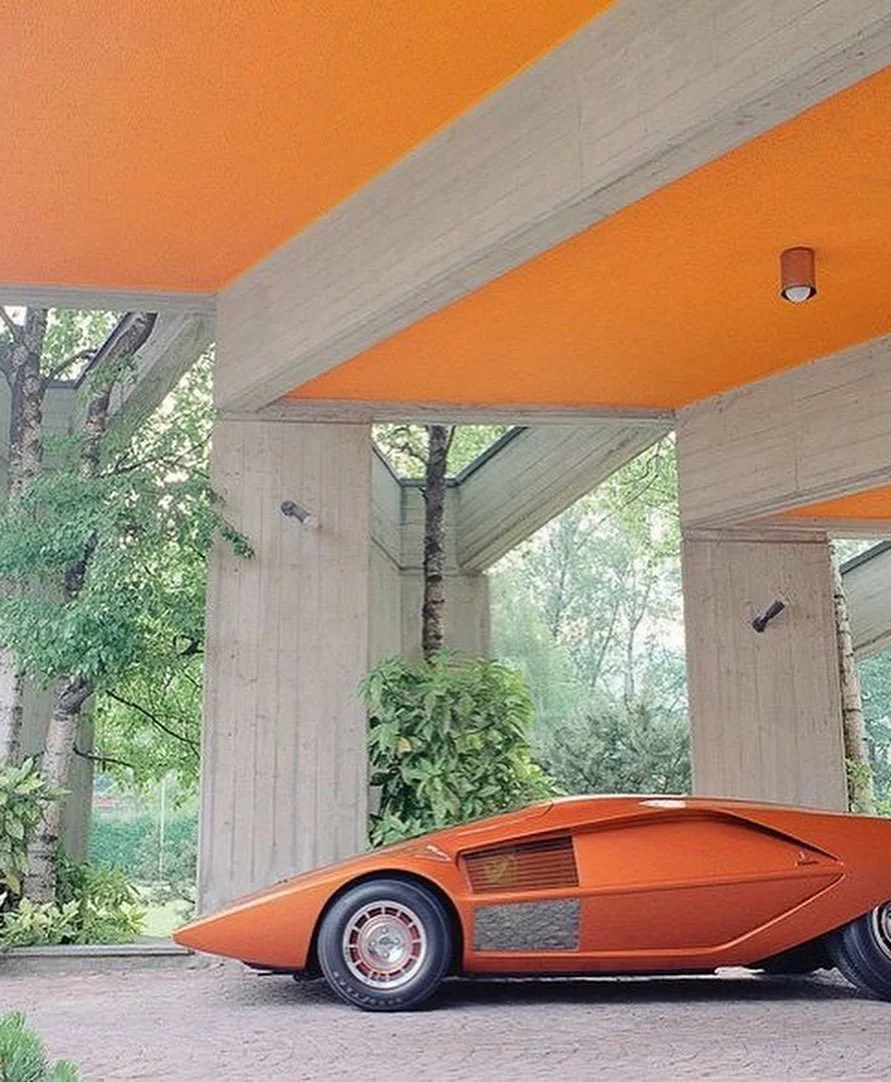
At its core, the Stratos Zero is an exercise in extreme reduction. The body resolves into a single, uninterrupted wedge—so low and so sharp that it appears to slice through space rather than move within it. With a height of just around 33 inches, the car challenges conventional proportions, compressing volume into a near two-dimensional form.
There is no traditional hierarchy between hood, cabin, and tail. Instead, the entire vehicle reads as a continuous surface—an angular plane that prioritizes horizontality and forward motion above all else. The result is not merely aerodynamic; it is architectural.
Rethinking Entry, Interaction, and Form
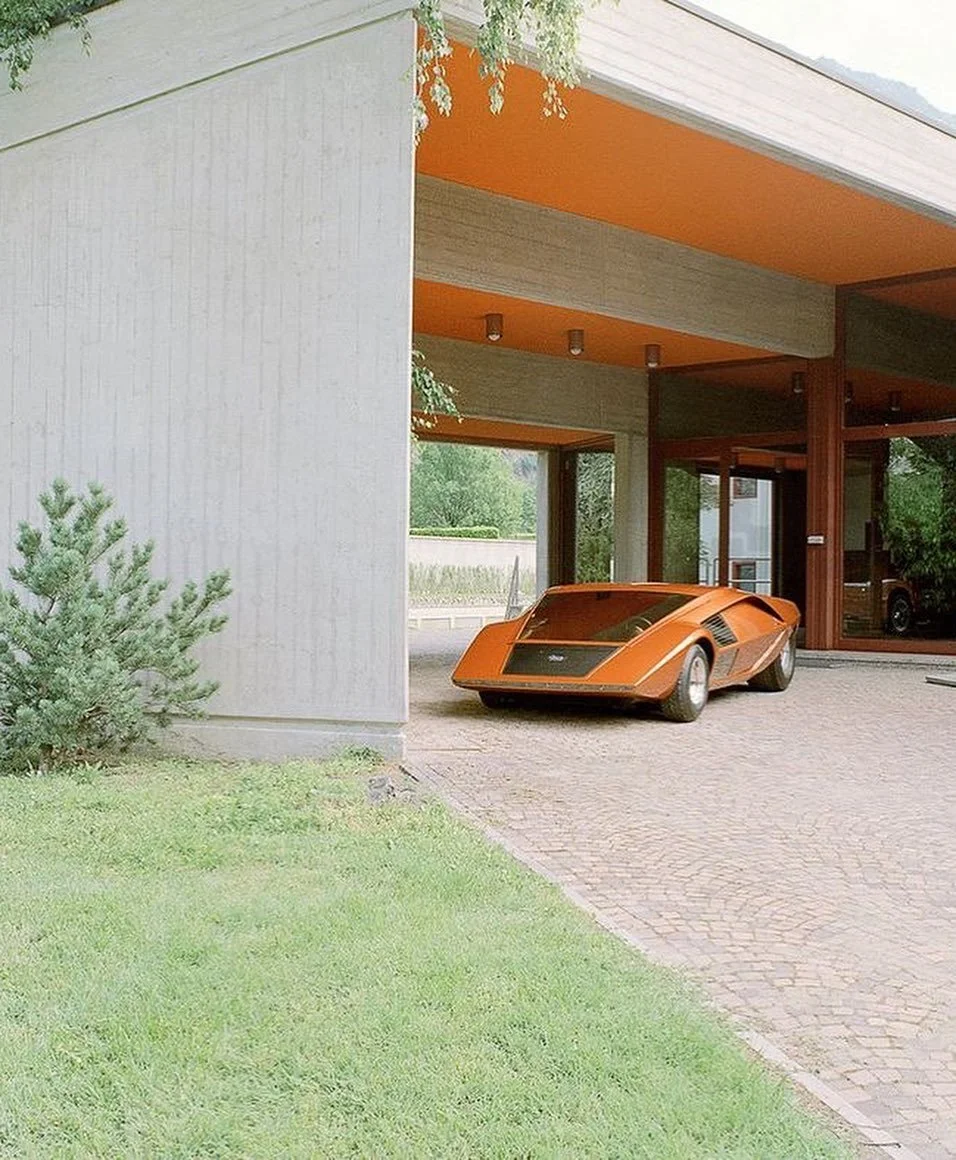
Perhaps the most striking departure from convention is how you enter it. There are no doors. Instead, the windshield tilts upward, transforming the entire front plane into an access point. This gesture collapses the boundary between exterior and interior, reinforcing the idea that the car is a single unified object, not a collection of parts.
Inside, the experience mirrors the exterior philosophy—minimal, compressed, and highly intentional. The driver is positioned almost reclined, emphasizing the car’s low center of gravity and further aligning human posture with the vehicle’s geometry.
Material Continuity and Surface Integration
The Stratos Zero operates through material and surface continuity. Glass and body panels blend into a seamless envelope, removing visual interruptions and emphasizing the purity of form. This approach anticipates modern ideas in product design where enclosure and structure are tightly integrated—something now common in everything from consumer electronics to EV platforms.
There’s an honesty in the construction: no unnecessary ornamentation, no visual noise. Every line serves the larger geometric thesis.
Influence That Outpaced Its Era
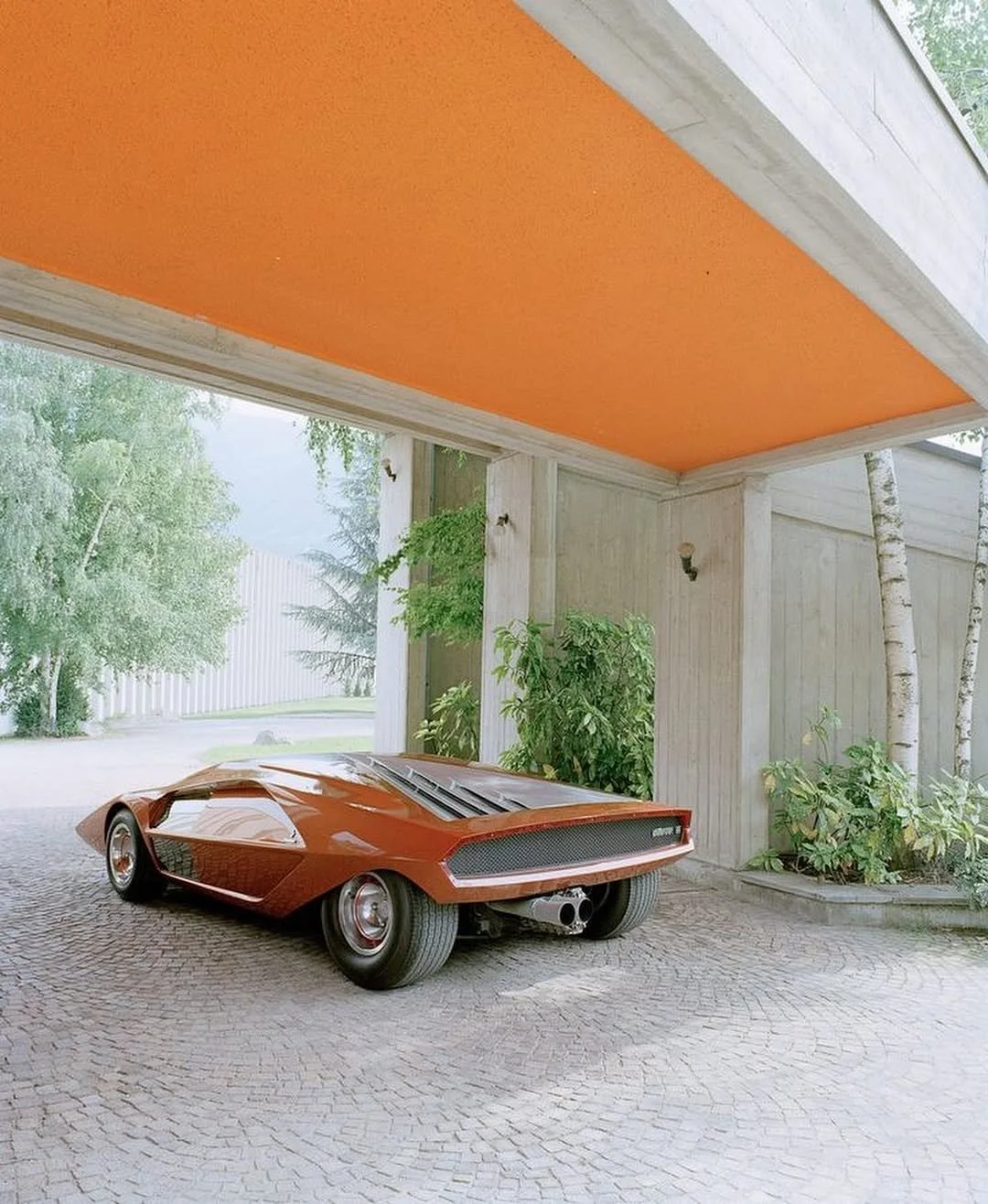
While the Stratos Zero was never intended for production, its impact is difficult to overstate. It directly influenced the development of the rally-dominating Lancia Stratos HF and helped define the wedge-era language seen in cars like the Lamborghini Countach—also designed by Gandini.
More broadly, it set the tone for decades of concept cars that treat vehicles as design experiments rather than mere transportation.
Why It Still Matters
Today, the Stratos Zero reads less like a relic and more like a preview. In an era where EV packaging, autonomous layouts, and digital interfaces are reshaping automotive design, its core ideas—integration, reduction, and radical rethinking of form—feel newly relevant. I don’t want to say it, but the CyberTruck was a nice try at something Gandini did with futuristic vision over 50 years ago.
More on the Lancia Stratos Zero
The Lancia Stratos Zero is a one-off concept car unveiled by Italian coachbuilder Carrozzeria Bertone at the 1970 Turin Motor Show. Designed by Marcello Gandini under Nuccio Bertone, it exemplified the radical “wedge” design era and marked a turning point in automotive styling. The futuristic shape later influenced both the production Lancia Stratos HF and icons like the Lamborghini Countach.
Key facts
Debut: 1970 Turin Motor Show
Designer: Marcello Gandini for Bertone
Engine: 1.6 L Lancia Fulvia V4 (≈115 hp)
Height: 33 in (84 cm) — among the lowest ever built
Top speed: ~120 mph
Design and Engineering
Constructed on a modified Lancia Fulvia HF 1600 chassis, the Stratos Zero’s fiberglass body measured only 3.58 m long and less than 0.85 m high. Its sharply angled, trapezoidal profile and copper finish made it appear more spacecraft than automobile. Entry was through a flip-up windshield rather than doors, while a retractable steering column eased access. Double-stacked side windows, horizontal lighting bands, and a rear engine cover formed part of its experimental aesthetic.
Influence and Legacy
The Zero helped define the 1970s wedge-car movement, influencing vehicles from the Countach to the De Tomaso Pantera. It also sparked collaboration between Bertone and Lancia that produced the rally-winning Lancia Stratos HF of 1973. Its geometric purity and radical proportions made it a recurring presence at design exhibitions and concours events.
Preservation and Recognition
After decades in the Bertone Museum near Turin, the concept was sold at auction in 2011 and now resides in a U.S. private collection. It continues to appear at global shows—winning its class at the 2024 Pebble Beach Concours d’Elegance and appearing at Concorso d’Eleganza Japan 2025—celebrated as one of the most visionary concept cars ever created.